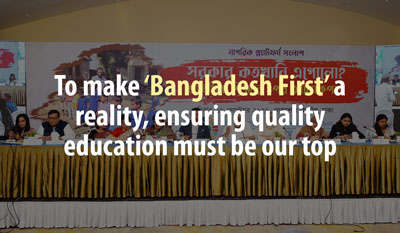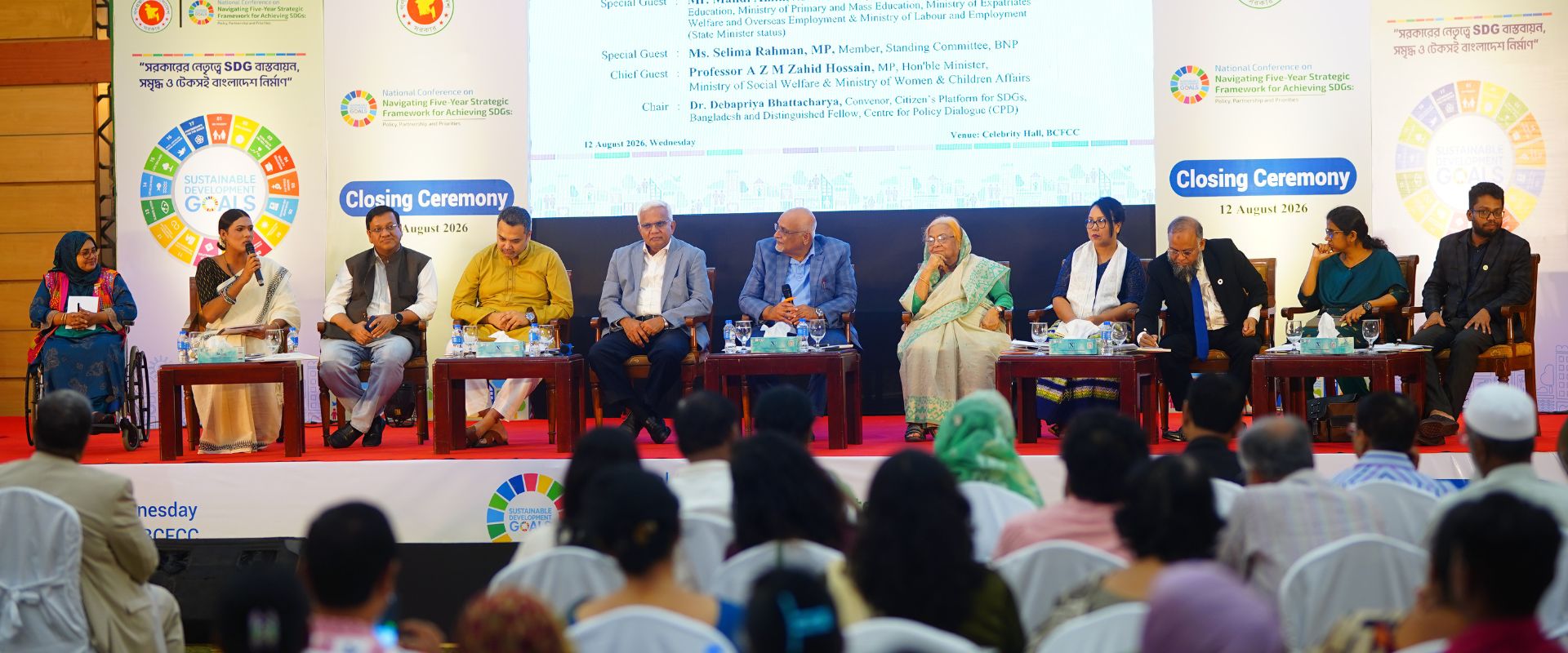
As Bangladesh enters a new five-year strategic cycle, the question of who benefits from development and who remains excluded, is becoming increasingly important. This was at the centre of Plenary Session 2 of the National Conference titled “Navigating Five-Year Strategic Framework for Achieving SDGs: Policy, Partnership and Priorities”, held on 12 August 2026 in Dhaka.
Citizen’s Platform for SDGs, Bangladesh was part of the plenary session, bringing the perspectives and lived experiences of civil society and marginalised communities into the national policy discussion on Bangladesh’s Five-Year Strategic Framework for Reform and Development (July 2026–June 2031) and the Sustainable Development Goals (SDGs). The session, titled “Inclusive Development, the Five-Year Strategic Framework for Reform and Development (July 2026–June 2031), and the SDGs”, brought together high-level policy makers, government representatives, representatives of civil society organisations, development actors and representatives of marginalised communities to examine how Bangladesh’s next phase of development can become more inclusive and responsive to those furthest behind.
The conference was hosted by the General Economics Division of the Bangladesh Planning Commission and the Governance Innovation Unit (GIU) of the Prime Minister’s Office, as part of broader efforts to strengthen government–NGO partnerships around Bangladesh’s development priorities.
For the Citizen’s Platform, the session provided an opportunity to bring the Leave No One Behind (LNOB) perspective into the strategic planning process, connecting national development ambitions with the realities faced by people living furthest behind from the policy discussion.
The discussion moved beyond national averages and aggregate indicators to a more fundamental question: can Bangladesh’s next phase of development deliver meaningful improvements for those who have historically remained furthest from opportunity, services and rights?
From national progress to individual realities
Chaired by Dr Debapriya Bhattacharya, Convenor of the Citizen’s Platform and Distinguished Fellow at the Centre for Policy Dialogue (CPD), the session opened with a reflection on Bangladesh’s progress towards the Sustainable Development Goals (SDGs) and the gaps that remain beneath the headline numbers.
Dr Bhattacharya emphasised that advancing the SDGs requires more than aggregate progress. It requires stronger collaboration among government, civil society and other stakeholders, particularly at a time when poverty, inequality and exclusion continue to shape people’s lived realities.
The SDG journey through a Leave No One Behind lens
Mr Towfiqul Islam Khan, Additional Research Director at CPD, set the stage with a trigger presentation, Bangladesh’s SDG Journey in the Last Decade from the LNOB Lens.
The key message from his trigger presentation was: national averages can tell a story of progress while simultaneously concealing a parallel reality of exclusion.
The presentation highlighted four interconnected challenges:
- Moving beyond the tyranny of averages. Bangladesh’s achievements in economic growth, infrastructure and SDG indicators need to be assessed alongside the gaps experienced by the most disadvantaged citizens.
- Putting the Leave No One Behind (LNOB) principle into practice. Marginalised communities continue to face overlapping and multidimensional vulnerabilities that are often invisible in aggregate statistics.
- Closing data and accountability gaps. Weaknesses in disaggregated data, institutional accountability, data integrity and policy implementation can allow exclusion to persist.
- Identifying those most at risk. Children, women, young people, persons with disabilities, climate-vulnerable communities and ethnic minorities remain particularly exposed to being left behind.
The presentation called for a national LNOB Data Framework, greater institutional representation of marginalised communities, time-bound reform actions linked to political manifesto commitments, and stronger accountability for implementation.
Bringing lived experience into the policy conversation
The session then shifted from data and policy frameworks to the experiences of people who encounter exclusion first-hand.
Ms Ashrafun Nahar Misti, Executive Director of the Women with Disabilities Development Foundation (WDDF), highlighted major gaps in data on persons with disabilities, including the number and types of disabilities. She stressed the importance of accessible transport and infrastructure, alongside sustained caregiver support throughout the life cycle. Such support, she noted, is critical not only to well-being and independence but also to meaningful participation in development.
Representing the third-gender community, Ms Ramisa Chowdhury, Paralegal at Bandhu Social Welfare Society, drew attention to barriers to accessing public services, particularly for people without National Identity Cards (NIDs). She also highlighted the lack of reliable data on the size of the third-gender population and called for a fundamental shift in social narratives and perceptions.
Mr Sohanur Rahman, Chief Executive of Youth Net Global, brought together the perspectives of young people and climate-vulnerable communities. He emphasised that marginalised people must not remain outside social protection and development initiatives. Stronger inter-ministerial coordination, he argued, is essential to ensure that resources reach the right priorities — particularly communities living in chars and haors. He also raised a critical question: can people without NIDs access Family Cards and other social protection services?
Labour rights activist and photographer Ms Taslima Akhter welcomed the inclusion of informal workers in the new Labour Law, while calling for a universal national minimum wage and non-wage benefits for informal workers. She stressed the need to eliminate child labour and ensure decent work, particularly for women. At its core, she argued, inclusion also means protecting people’s fundamental freedoms — the freedom to live, earn a livelihood and express themselves.
From commitments to delivery
Responding to these concerns, Dr Abu Yusuf, Secretary of the Ministry of Social Welfare, acknowledged the constraints created by limited fiscal space and resources. He noted that the FY2026–27 budget has increased allocations for social protection and that efforts are underway to strengthen coordination across ministries.
He also outlined plans for a needs assessment of existing training programmes to better align them with beneficiaries’ requirements. The Ministry of Women and Children Affairs, he added, is implementing day-care and caregiver training initiatives.
The discussion made clear that inclusion cannot be achieved through a single programme or institution. It requires coordination across policies, budgets and delivery systems — and, crucially, mechanisms that allow marginalised citizens to shape those systems.
What citizens expect from the new strategic framework
The open-floor discussion reinforced several priorities.
Participants called for:
- Accessible day-care services for children across socio-economic groups, including children from disadvantaged communities and families of informal workers.
- Greater social inclusion of third-gender communities, slum dwellers and people living in marginalised and hard-to-reach areas.
- Equal rights and access to public services for Adivasi communities living in the hill tracts and plains.
- A stronger role for young people and youth-led organisations as partners in government programmes, rather than treating them only as beneficiaries.
These interventions underscored a broader point: inclusive development is ultimately about who gets to access opportunities, services and rights — and who gets to shape the decisions that determine them.
Reaching the furthest behind
Ms Madhobi Marma, MP (Chattogram Hill Tracts), in her remarks as Guest of Honour, highlighted the persistent challenges confronting communities in hard-to-reach areas. Access to primary education, safe water and adequate health services remains constrained by geographical remoteness. She noted that the BNP-led government has begun implementing its manifesto and expressed the expectation that these commitments would translate into tangible improvements in the lives and livelihoods of communities in the hill tracts.
As Special Guest, Mr Mahdi Amin, Adviser (status of State Minister) to the Prime Minister and Spokesperson of the Prime Minister’s Office, noted that the democratically elected government has begun implementing its manifesto and that its policy priorities are informed by the needs of different sections of society. He described the national budget as pro-investment, with a focus on creating an enabling environment for economic growth. He also noted that, over the medium term, the Bangladesh Nationalist Party (BNP) is working towards sustainable solutions to the country’s fuel-related challenges.
Ms Selima Rahman, MP and Member of the Standing Committee, BNP, on her remarks as Special Guest, emphasised that inclusion is an important element of the government’s strategic framework. She welcomed the diversity of perspectives represented both from the panel and the floor, and highlighted the potential of planned initiatives such as the Family Card and Farmers’ Card to extend social protection and support to the most vulnerable.
Accountability must follow ambition
Hon’ble Minister of the Ministry of Social Welfare, Mr Abu Zafar Md. Zahid Hossain, MP, in his intervention as Chief Guest, framed the government’s approach around the idea that while the BNP’s motto is ‘Bangladesh First’, its underlying principle is ‘Bangladesh for everyone’. He highlighted the Ministry’s work on vocational skills training and mobile therapy services for persons with disabilities. He also noted government’s plans to establish day-care centres through public-private partnerships, informed by mapping and prioritisation, and to strengthen training for the care economy.
The Minister also stressed that a democratically elected government is ultimately accountable to citizens and must respond to their needs and aspirations. That accountability will be particularly important as Bangladesh moves from commitments to implementation under the new five-year strategic framework.
Keeping citizens at the centre
Closing the session, Dr Bhattacharya appreciated the hands-on engagement demonstrated by government representatives throughout the discussion.
He returned to one of the most fundamental barriers raised during the session: access to National Identity Cards for all citizens, particularly because NIDs can determine access to public services and social protection.
The discussion also reflected a changing social landscape. As aspirations rise, citizens are likely to demand not only development outcomes but also greater responsiveness, inclusion and accountability from institutions.
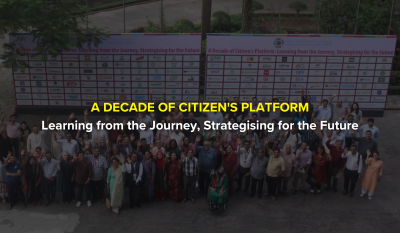
The Citizen’s Platform will continue to follow these commitments through its Reform Tracker and Manifesto Watch — providing citizens with tools to track whether policy commitments translate into reforms, and whether reforms translate into meaningful change in people’s lives.
For Bangladesh’s next phase of development, the measure of progress will not simply be how far the country moves forward — but how few people are left behind.