

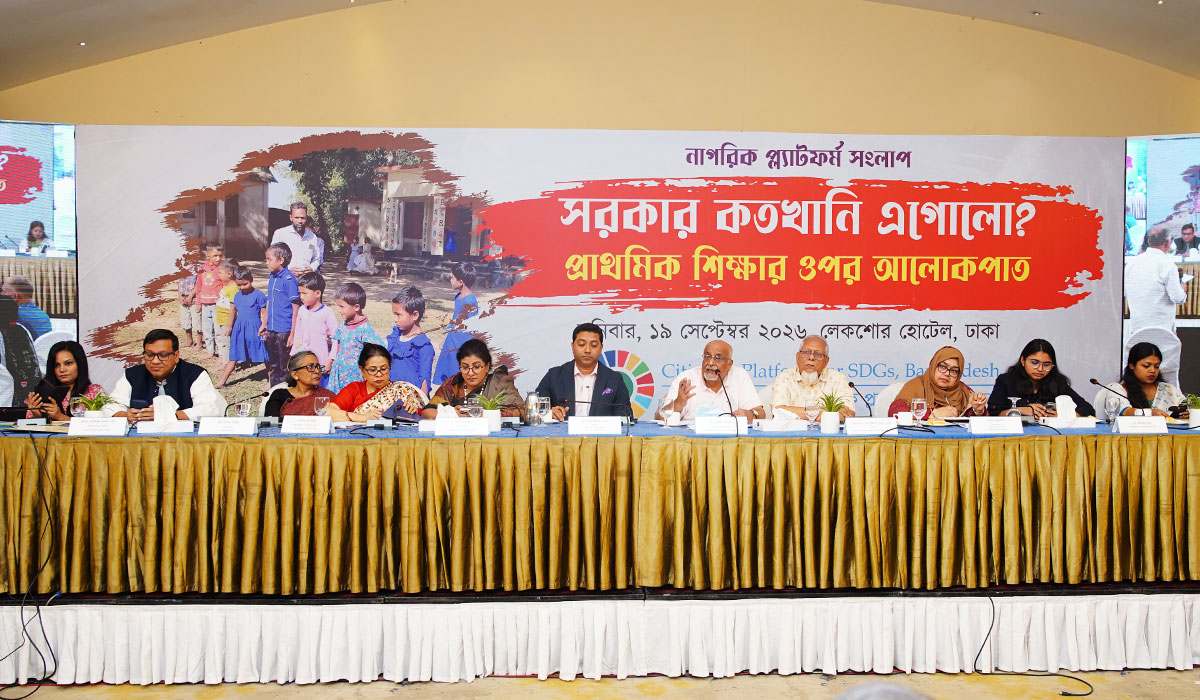
The current government has made a number of commitments to improve the quality, accessibility, equity and relevance of primary-level education. As the government completed its first 200 days in office, Citizen’s Platform for SDGs, Bangladesh organised a national dialogue to provide an opportunity to take stock of what has been delivered in the education sector against its commitments and who is being left behind. The dialogue, titled “Is the Government Delivering? Spotlight on Primary Education,” was held on 19 September 2026 in Dhaka.
Chairing the dialogue, Dr Debapriya Bhattacharya, Convenor, Citizen’s Platform and Distinguished Fellow, Centre for Policy Dialogue (CPD), emphasised the importance of bringing transparency and accountability together in assessing the government’s commitments. He noted that education, particularly primary education, forms the foundation for Bangladesh’s longer-term development and that progress must ultimately be judged by whether commitments result in meaningful improvements for learners.
As the Chief Guest, Mr Bobby Hajjaj, MP, Hon’ble State Minister, Ministry of Primary and Mass Education, listened to participants and representatives from the local level. He noted that the government was working on many of the issues raised during the dialogue. He highlighted ongoing efforts to expand the mid-day meal programme, address teacher shortages, develop a guideline for professional pathways for teachers, and strengthen coordination across different streams and institutions. He also welcomed continued scrutiny of the government’s commitments and emphasised the importance of accountability for progress.
In her opening statement, Dr Nazneen Ahmed, Executive Director, CPD, stressed that expanding access to education alone is no longer sufficient. While Bangladesh has made considerable progress in enrolment and gender parity, she highlighted the need to focus more strongly on the quality and usefulness of education, equity in access, learning outcomes and the development of life skills. She also underscored the importance of moving away from an excessively result-oriented mindset and encouraging parents to assess children’s development more holistically. She noted that CPD and the Citizen’s Platform seek to use evidence to assess whether policies and programmes are serving people’s needs rather than approaching the exercise simply as one of criticism.
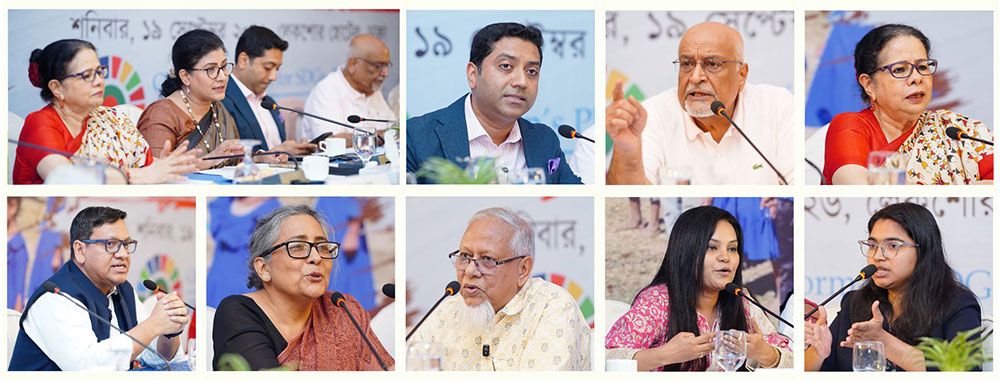
Presenting the keynote, Mr Towfiqul Islam Khan, Additional Director, Research, CPD, reviewed the progress of education-related electoral commitments using the Bangladesh Reform Tracker website. The analysis examined 24 pledges relevant to primary education and crosscutting issues, covering areas of access and student welfare, curriculum and pedagogy, digital infrastructure, teachers and professional welfare, and governance and financing. Some initiatives, including the mid-day meal programme and free school uniforms, had moved further through the policy and implementation process, while several structural reforms remained at earlier stages. The analysis also highlighted significant structural and execution challenges in education financing, with persistent underfunding, low-budget utilisation, and institutional bottlenecks affecting implementation.
The presentation characterised the government’s initial progress on primary education as a “credible start”, while emphasising the need to sustain momentum through a comprehensive action plan and move from announcements and pilots towards full implementation. Key priorities include the timely implementation of PEDP5, addressing financing and institutional constraints, strengthening coordination and school-level engagement, and ensuring that reforms translate into meaningful improvements in classroom practice.
Professor Dr Md. Elias Molla, MP, Member, Parliamentary Standing Committee on the Ministry of Primary and Mass Education, highlighted the importance of teacher quality and training, student retention and the practical conditions required to implement new initiatives. He also stressed that technology-based interventions need to take account of infrastructure, electricity and connectivity constraints at the local level.
Hon’ble Member of Parliament Ms Mst. Nusrat Tabassum Joty emphasised the importance of looking beyond enrolment figures to assess the retention rate of the students. She also highlighted the need to involve parents in curriculum-related discussions, establish clearer professional pathways for teachers, strengthen teacher preparedness, and create safer and more supportive school environments for children.
Among the distinguished speakers, Ms Rasheda K Choudhury, Core Group Member, Citizen’s Platform and Executive Director, Campaign for Popular Education (CAMPE), emphasised the importance of ensuring quality learning inside classrooms, involving parents and communities in accountability processes, and strengthening community-based monitoring. She also highlighted the need for a non-partisan approach to education reform and for greater coherence across Bangladesh’s fragmented education streams.
Ms Shahina Ferdousi, Director General, Directorate of Primary Education, noted that many of the concerns raised were already under consideration and welcomed several specific suggestions emerging from the dialogue. She emphasised the importance of inter-ministerial coordination and inclusive education so that no child is left behind.
Ms Luva Nahid Choudhury, Director General, Bengal Foundation, welcomed the greater emphasis on sports, culture, creativity and analytical skills, while stressing that the effectiveness of such initiatives would depend on how they are implemented. She highlighted the importance of inter-ministerial collaboration, quality digital educational content, and building teachers’ capacity to use formative assessment, particularly in arts, culture and sports.
Professor Dr Nahreen I. Khan, Department of Geography & Environment, Jahangirnagar University, spoke about the challenge of ensuring a more coherent education experience for children across different streams. She also highlighted teacher conditions, curriculum development, ethics and values, sports and cultural education, and the need to ensure that curriculum reforms translate into meaningful learning.
Dr Tasnim Jara, Politician and Co-Founder, Shohay Health, drew attention to practical gaps that can easily be overlooked in large reform agendas. She highlighted the need for basic first-aid preparedness in schools, attention to the mental health of both students and teachers, effective monitoring and accountability mechanisms, and an interoperable education identification system. She argued that improvements in education quality would require attention not only to infrastructure and technology but also improving the capacity of the teachers.
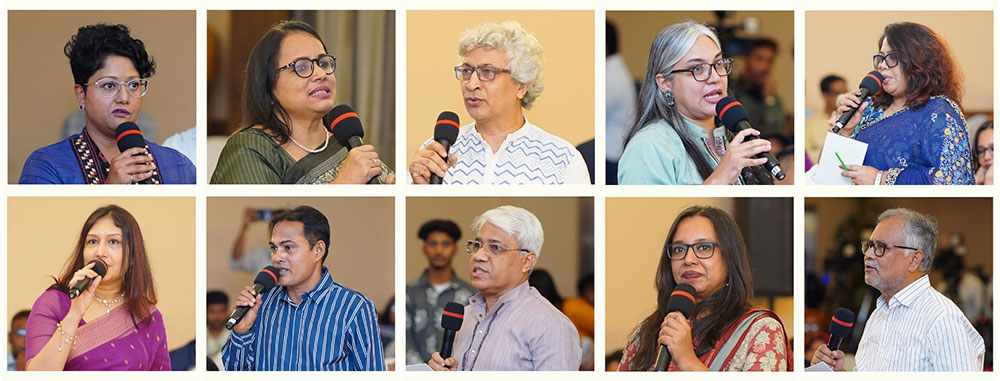
The dialogue gave substantial space to voices from the local level. Primary school head teachers and teachers, leaders of teachers’ associations, and local government officials highlighted a range of issues, including teacher shortages, limited opportunities for career progression and promotion, gaps in training, inadequate school-level financing, difficulties faced by schools in hard-to-reach areas, lack of parental and community engagement, and the inadequacy in maintenance of digital and physical infrastructure. They also expressed concern about the politicisation of School Management Committees (SMCs) and proposed community-based approaches to hold the school authority accountable. Particular concerns were raised about mismanagement in the mid-day meal programme, especially in the Chittagong Hill Tracts, including reports of food reaching schools after its expiry date. Participants further drew attention to the specific needs of children in geographically remote areas, learners with disabilities, and students in different streams of education.
In his closing remarks, Dr Debapriya Bhattacharya observed that the discussion reflected emerging areas of common ground around improving primary education. He stressed, however, that the central challenge would be to translate commitments, policy initiatives and stakeholder consensus into effective implementation. Citizen’s Platform will continue to track progress on education-related commitments through the Bangladesh Reform Tracker and bring evidence from citizens and local stakeholders into the accountability process.
Leave A Comment