Reform becomes meaningful when commitments translate into action — and when the people affected by those commitments have a voice in shaping them.
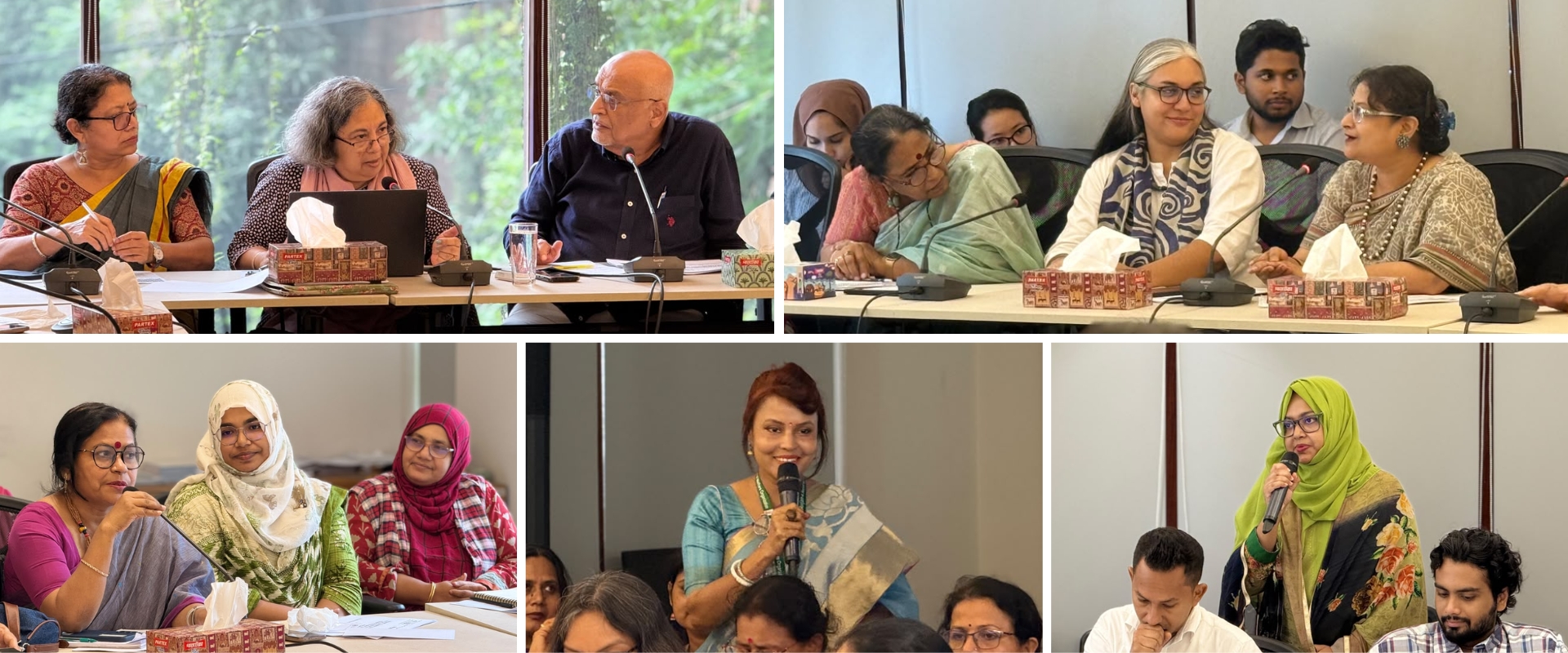
This idea shaped the expert group consultation on “Women Affairs Reform – Status and Challenges for Localisation”, organised by the Citizen’s Platform for SDGs, Bangladesh, in collaboration with Naripokkho, on 4 August 2026 in Dhaka. Partner Organisations of Citizen’s Platform, civil society representatives, gender experts and development policy practitioners to explore two complementary questions: (i) how are women affairs reforms progressing, and (ii) how can women, particularly young women, play a stronger role in shaping development at the local level?
The discussion brought together two initiatives with a natural point of connection. The Bangladesh Reform Tracker, developed by the Citizen’s Platform, was presented with its newly launched Women Affairs Reform domain, while Naripokkho presented its proposed Gender-Transformative Model for SDG Localisation. Together, they offered two sides of the same reform agenda — tracking commitments at the national level and strengthening women’s participation at the local level.
Tracking Women Affairs Reform
The Bangladesh Reform Tracker is an independent, evidence-based digital platform that follows national reform commitments, legislative developments and institutional changes. Its Women Affairs Reform domain brings a focused lens to reforms affecting women, including gender-based violence, economic inclusion, access to justice and political participation.
At the consultation, participants were introduced to the domain and its approach to tracking progress. By bringing commitments, developments and implementation into one accessible platform, the Reform Tracker can support civil society, media and citizens in understanding what has been promised, what has changed and where gaps remain.
But national-level tracking tells only part of the story.
Bringing Young Women into Localisation
Naripokkho’s proposed Gender-Transformative Model for SDG Localisation approaches the question from the other direction.
Developed through its work with UN Women to strengthen young women’s leadership in public life, with support from the SDG Fund through UNOPS, the model explores how young women can contribute more meaningfully to SDG localisation and local decision-making.
Drawing on experience from Dhaka, Chattogram and Rajshahi, the proposed model considers capacity building, mentorship and engagement with local governance processes. Its underlying premise is that young women should not only benefit from development, but also have opportunities to influence the priorities and decisions that shape their communities.
The model also connects SDG 5 on Gender Equality with SDG 16 on Peace, Justice and Strong Institutions, recognising that meaningful participation and gender equality depend on institutions that are inclusive, responsive and accountable.
Where the Two Meet
The strength of the consultation lay in bringing these two perspectives together.
The Reform Tracker asks: what has been committed, and what progress has been made?
The localisation model asks: who is participating in shaping that progress, and how can their voices influence decisions where development happens?
One creates a stronger evidence base for accountability; the other seeks to strengthen the agency and participation needed to make accountability meaningful at the local level.
The connection is particularly important for women affairs reform. National commitments on gender equality, access to justice, economic participation or protection from violence ultimately have to be experienced through institutions, services and decisions at the local level. At the same time, the experiences of women and young women in communities can reveal gaps between what is promised nationally and what is happening in practice.
This creates a two-way relationship: national reform tracking can inform local advocacy, while local experiences can bring greater context and urgency to national accountability.
From Reform to Meaningful Participation
The consultation therefore moved beyond asking whether reforms are being made. It also raised a broader question about who gets to shape them.
For the Citizen’s Platform, the discussion comes at an important time as it expands the Bangladesh Reform Tracker’s focus to Women Affairs Reform. For Naripokkho, the proposed localisation model offers an opportunity to strengthen young women’s leadership within Bangladesh’s wider SDG and development processes.
Together, the two approaches point towards a more connected way of thinking about reform — one that links evidence with experience, national commitments with local realities, and accountability with participation.
Because reform is not complete when a commitment is made. It becomes meaningful when progress can be tracked, local realities are heard, and the people it is meant to serve have a voice in shaping what comes next.